Hierarchy of the Gods – A mischievous Interpolation
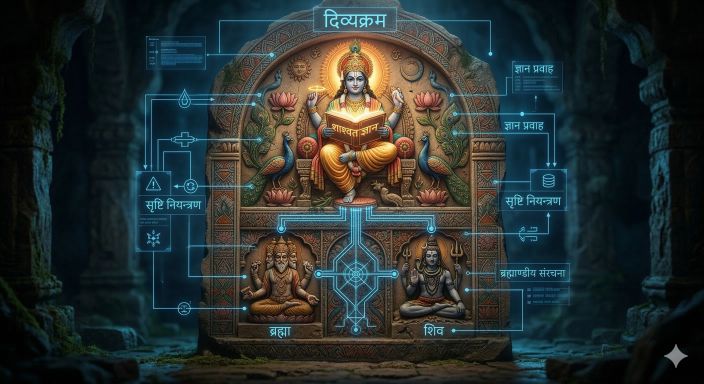
The Theological Coup – Demoting the Divine
This is perhaps the most “combative” layer of the epic Mahabharata. These interpolations were not just additions; they were Sectarian Strikes—territorial markings by rival priesthoods to establish their deity as the “Supreme CEO” of the universe.
In the original Jaya, the gods often functioned as primordial, distinct powers. But as the epic grew, it became a battlefield for “Sectarian Subordination.” Rival sects (primarily Vaishnavas) used the text to rewrite the hierarchy of the cosmos, demoting other deities to “Middle Management.”
1. The “Grandfather” Theory: Subordinating Shiva
In many later recensions (primarily the Southern & Northern versions), a blatant interpolation was inserted to foment the Shaiva-Vaishnava rivalry.
- The Interpolation: These verses claim that Brahma was born from Vishnu’s navel, and Shiva (Rudra) was born from Brahma’s forehead.
- This layer is found in the Dhana-Dharma Parva sub-section of Anushasana Parva. It is also spread across the epic at many instances attributed to various characters, including Lord Shiva himself!
- The “Civic” Goal: By making Shiva the “grandson” of Vishnu, the redactors stripped him of his primordial status. He was no longer the beginning; he was a derivative.
( Thus Vishnu is made a Grandfather of Shiva, not an equal! Since Brahma was called “Pitamaha” being the progenitor of all living beings, Vishnu is to be termed as “प्रपितामह” of Shiva!) - The Audit: Scholars like R.N. Dandekar note that in the older “Heroic” core, Shiva and Vishnu are treated with mutual, almost equal, power. This “Genealogical Subordination” is a classic sectarian seam.
- Rejected: This redaction is not part of the “original” core text of the Critical Edition of Mahabharata (BORI), but relegated to the footnotes as it is not found in all manuscripts.
-
Motives for the Insertion
The motive behind such insertions was almost certainly Sectarian Consolidation. During the period when the Mahabharata was transitioning from an oral epic to a written scripture (roughly 200 BCE – 400 CE), various religious sects were competing for supremacy:
-
Vaishnava Appropriation: By incorporating Shiva into Vishnu’s genealogy, Vaishnava redactors could acknowledge Shiva’s divinity (satisfying his followers) while systematically placing him in a subordinate role. It turned a rival god into a family member—specifically a descendant.
-
Harmonization of the Trimurti: Some interpolations sought to create a unified “Project Management” view of the universe where Vishnu is the CEO (Source), Brahma is the Architect (Creator), and Shiva is the Specialist (Destroyer).
-
Counter-Interpolations: Interestingly, the Mahabharata also contains “Shaiva” interpolations (like the Shiva Sahasranama) where Vishnu is described as a devotee of Shiva who received his Sudarshana Chakra from him. Besides, there are many assertions in Mahabharata text praising the primacy and glory of Shiva attributed to Bhishma, Narada and even Krishna. These “dueling interpolations” reflect the historical dialogue between sects.
-
2. The Skanda-Kartikeya Takeover
The birth of the war-god Skanda is one of the most confused sections of the epic, with multiple contradictory accounts.
- The Reason: Skanda was an immensely popular folk deity. The “Civic” redactors struggled to “capture” him.
- The Seam: Different interpolations try to make him the son of Shiva, or Agni, or even the Pleiades (Krttikas). Each version represents a different sect trying to claim the “God of War” for their own lineage.
3. The “Avatar” Lens: Making the Hero a God
The greatest interpolation of all is the overarching Avatar Theory.
- The “Barbaric” Reality: In the oldest layers, the Pandavas are heroes and Krishna is a master strategist.
- The “Sectarian” Strike: The Narayaniya section (in the Shanti Parva) and other late additions “Vaisnavize” the entire war. They argue that the war wasn’t a family feud, but a divine cleansing of the earth (Bhu-bhara-harana).
- The Result: This “God-filter” turns every human mistake into a “Divine Play” (Lila), effectively silencing the “Barbaric” grit of the original ballad.
4. The primacy of the Vaishnavite Pundit
Why does this matter? Because the sect that “owned” the epic “owned” the patronage of the Kings. By making Vishnu (and his avatar Krishna) supreme, the Vaishnava partisans ensured their social and financial dominance for centuries.
- Unmasking the Layers of the Great Epic Mahabharata
- Mahabharata Redactions – those approved by BORI & the parts rejected
இராமாயணம் மகாபாரதம் முதலிய இதிகாசங்களை தமிழில் திரு ராஜாஜி அவர்கள் சக்கரவர்த்தி திருமகன், வியாசர் விருந்து என்ற பெயரில் எழுதி எழுதி இருப்பதைத்தான் நான் படித்திருக்கிறேன்
அவர் சுருக்கமாக தான் குறிப்பிட்டிருக்கிறார் என்றாலும், அதைப் படித்த போதே எனக்கு பல சந்தேகங்கள் எழுந்தன.
மேலும் இவற்றை சம்ஸ்கிருத மூலத்தில் படித்த அறிஞர்கள் உபன்யாசம் செய்யும் பொழுது கேட்கும் வாய்ப்பும் கிடைத்திருக்கிறது.
அப்பொழுது என் மனதில் பல கேள்விகள் எழும்?
சில விஷயங்கள் ஒரிஜினல் வால்மீகி ராமாயணத்திற்கும் கம்பராமாயணத்திற்குமே வித்தியாசம் இருப்பதாக அறிகிறோம்.
அதேபோல மகாபாரதத்தில் வரும் கதைகளும் மாநிலத்திற்கு மாநிலம் வேறுபடுகின்றன.
இப்பொழுது உங்கள் கட்டுரையை படித்த பின், இரண்டிலுமே பல இடைச் செருகல்கள் அதிலும் குறிப்பாக மகாபாரதத்தில் வேண்டும் என்றே சிலர் தங்களுடைய கருத்தை புகுத்தி இருக்கிறார்கள் என்பது தெளிவாகிறது.
திரு. R.N. தண்டேகர் அவர்கள் பல ஆண்டுகள் ஆராய்ச்சி செய்து மகாபாரத மூலத்தில் இருந்த செய்யுள்களைத் தாண்டி இப்பொழுது எவ்வளவு செயல்களை சேர்த்து இருக்கிறார்கள் என்பதைக் கண்டறிந்து வெளியிட்டு இருக்கிறார் என்று நீங்கள் விளக்கிய விதம் சிறப்பு.
கட்டுரையை படிக்கும் பண்டிதர்கள் நீங்கள் சொல்லியிருக்கும் கருத்துக்களை விவாதத்துக்கு எடுத்துக் கொண்டால் மேலும் தெளிவு பிறக்கும் என்று நினைக்கிறேன்.
மிகவும் அருமையான பதிவு
பாராட்டுக்கள்.
Great effort!
Continue to dig deeper and bring out hitherto untold stories hidden in Mahabharata and the contradictions in the epic.
testing